


How to Get Your TABC and Food Handler Certifications in Texas
Prepare for Hospitality Opportunities in Texas
Planning to work in a restaurant, hotel, bar, banquet venue, catering company, or special event in Texas?
Depending on the position, an employer may ask you to have a current TABC Seller/Server Certification, a Food Handler Certificate, or both.
These certifications help hospitality professionals understand responsible alcohol service, food safety, personal hygiene, and contamination prevention. This guide explains what each certification is, why it may be important for your job, and where you can find approved training providers.
What Is a TABC Certification?
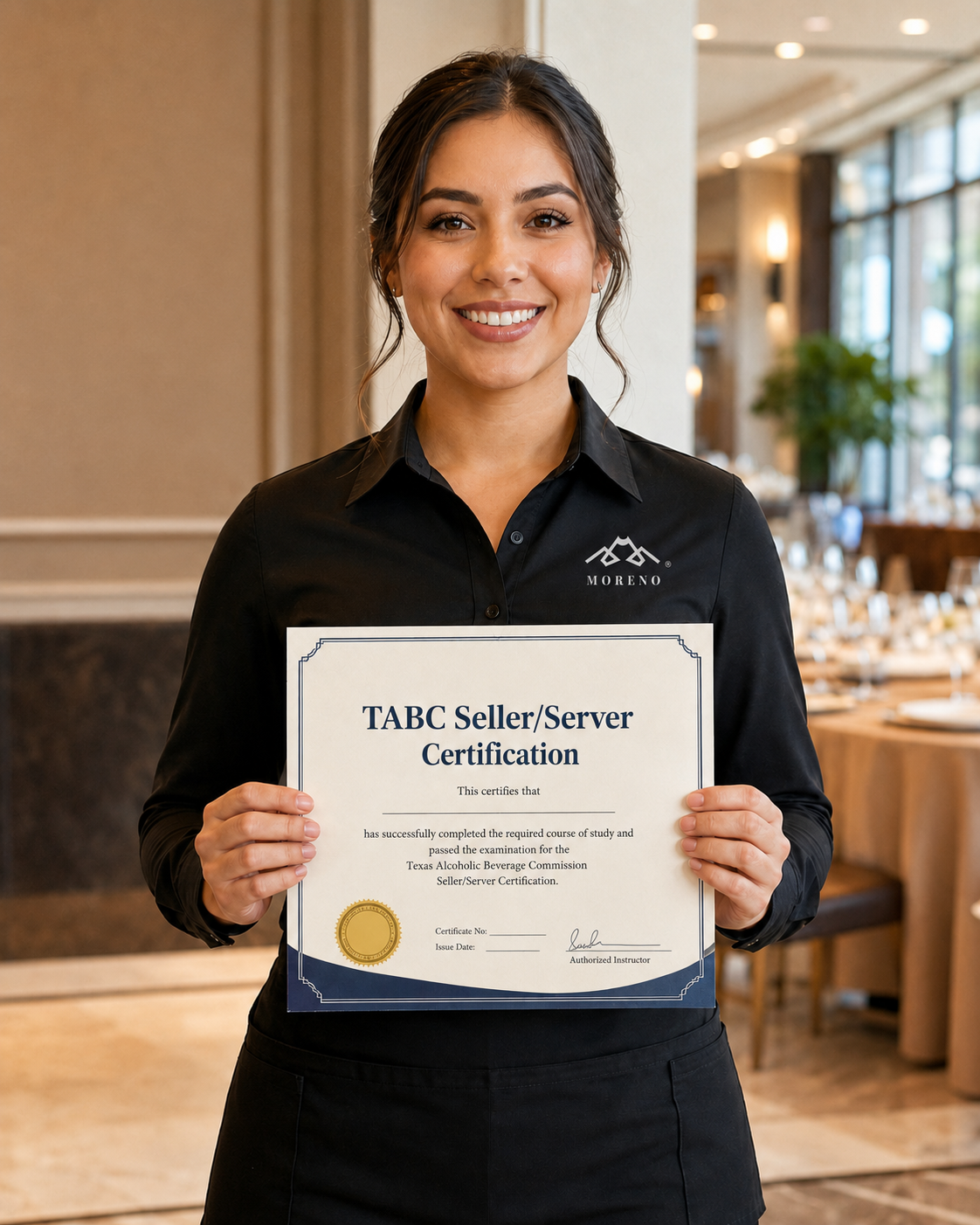
TABC stands for the Texas Alcoholic Beverage Commission.
The TABC Seller/Server Certification is a training program for people who sell, serve, dispense, or deliver alcoholic beverages in Texas. The course teaches participants about Texas alcohol laws and responsible alcohol service.
Training typically covers topics such as:
Checking identification and verifying a customer’s age
Preventing alcohol sales to minors
Recognizing signs of intoxication
Refusing an alcohol sale or service when necessary
Understanding the responsibilities of alcohol sellers and servers
Following Texas laws related to alcoholic beverage sales
Texas state law does not generally require bartenders and waitstaff to hold a TABC Seller/Server Certification. However, many employers require it as a condition of employment. A TABC Seller/Server Certification is valid for two years from its date of issuance.

Who May Need a TABC Certification?

Employers commonly request TABC certification for positions involving the sale or service of alcohol, including:
Banquet servers
Banquet bartenders
Food Runners
Line Cooks
Prep Line cooks
Event staff assigned to food and beverage
Requirements may vary depending on the employer, venue, client, and responsibilities of the position.
Why Is TABC Certification Important?
Hospitality employers may require TABC certification to help promote safe and responsible alcohol service.
Having a current certification may:
Help you qualify for positions involving alcohol service
Prepare you to identify minors or intoxicated customers
Help you understand when an alcohol sale or service must be refused
Demonstrate that you understand responsible alcohol service
Prevent delays when accepting certain hospitality assignments
Make you eligible for a wider range of bartender or server opportunities
TABC-approved training includes information about Texas alcoholic beverage laws and intervention techniques designed to prevent sales to minors and intoxicated customers.


What Is a Food Handler Certificate?

A Food Handler Certificate shows that an individual has completed training in basic food safety practices.
Food handler training is designed for employees who work with:
Unpackaged food
Food preparation equipment
Utensils
Dishes and glassware
Food-contact surfaces
Training commonly includes:
Proper handwashing
Personal hygiene
Preventing cross-contamination
Safe food handling
Cleaning and sanitizing
Preventing foodborne illness
Safe contact with ready-to-eat foods
Texas requires food employees to complete an accredited food handler training course within 30 days of employment, subject to certain exemptions.
Who May Need a Food Handler Certificate?
A Food Handler Certificate may be required for hospitality positions such as:
Cooks
Prep cooks
Line cooks
Kitchen assistants
Restaurant servers
Banquet servers
Food runners
Bussers
Dishwashers
Catering staff
Concession workers
Employees who handle food, utensils, or food-contact surfaces
The requirement depends on the employee’s duties and any applicable exemptions.



Why Is Food Handler Training Important?
Food safety is essential in every restaurant, hotel, banquet, catering operation, and hospitality venue.
Food handler training helps employees understand how everyday actions can affect the safety of guests and coworkers.
Having a current Food Handler Certificate may:
Help you meet Texas food safety requirements
Help prevent cross-contamination
Improve your knowledge of proper hygiene
Reduce the risk of foodborne illness
Prepare you for kitchen and food-service positions
Prevent delays when beginning a new hospitality job
Demonstrate that you are prepared to work safely around food
How to Get Your Certifications
If you do not have the required certifications yet, you can obtain them through the options below:
Food Handler Certification
Complete your Texas Food Handler training online.
GET YOUR FOOD HANDLER CERTIFICATION
Food Handler + TABC Certification Bundle
Get both your Texas Food Handler and TABC Seller/Server certifications in one convenient bundle.
GET THE FOOD HANDLER + TABC BUNDLE
Courses and certifications are provided by 360training. Moreno does not issue or administer these certifications.
Disclaimer
Moreno does not provide, sell, issue, endorse, or approve TABC Seller/Server Certifications or Food Handler Certificates.
This page is provided for general educational and informational purposes only. All certifications must be obtained directly through an independent provider approved or accredited by the appropriate authority.
Course prices, availability, language options, requirements, regulations, and provider information may change. Moreno does not control third-party websites, course providers, payments, course content, examinations, certificates, or customer service.
Before registering or making a payment, confirm that the provider is currently listed as approved or accredited by the Texas Alcoholic Beverage Commission, the Texas Department of State Health Services, or another applicable accrediting authority.